Does Plucking a Gray Hair Make More Grow Back?
Plucking one gray hair does not make more grow. Learn why each follicle grows only one hair, what grows back after plucking, and what dermatologists advise.
LIUMIQ Team
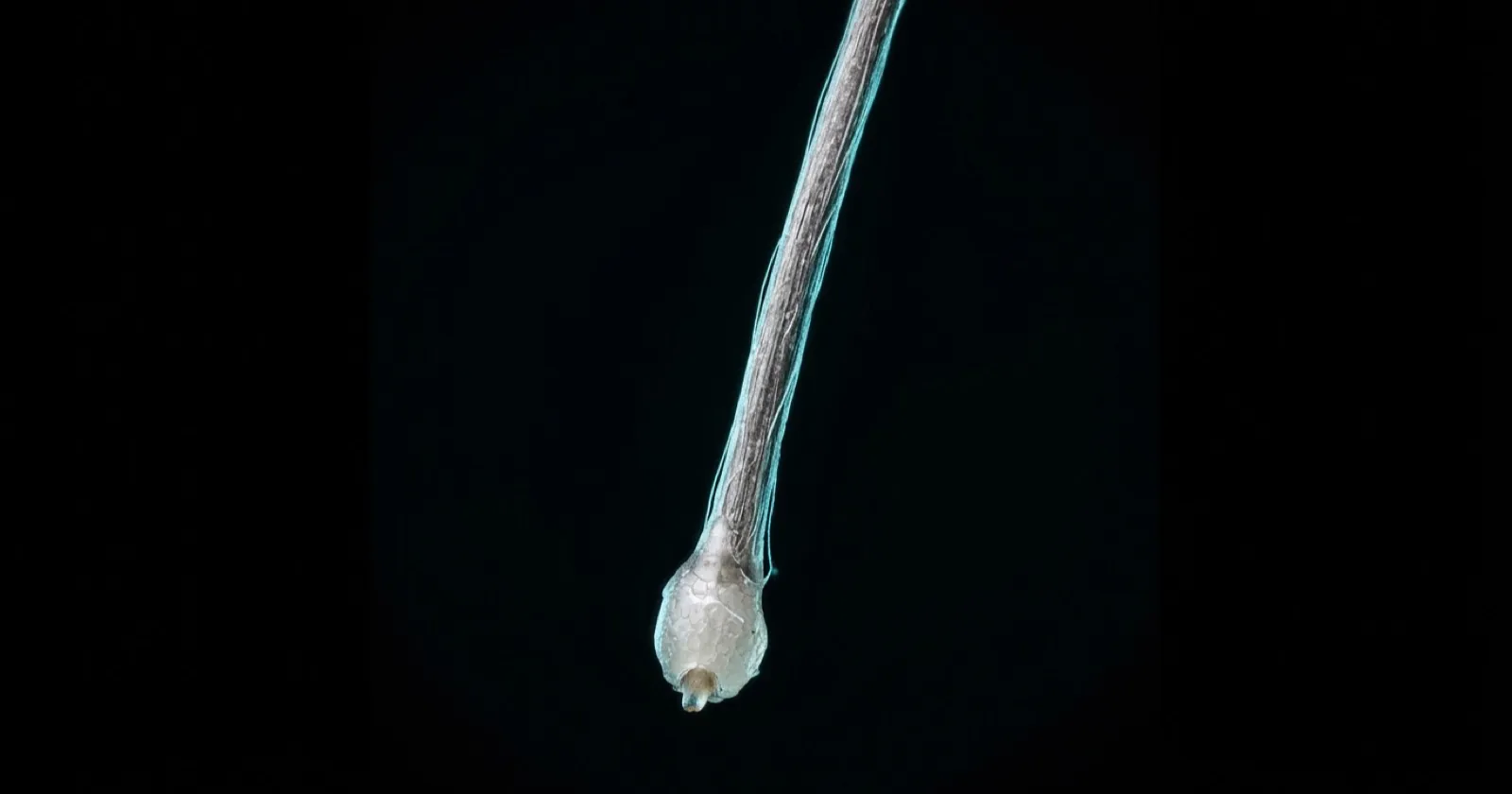
No. Plucking a gray hair does not make more gray hairs grow. Each follicle grows only one hair, so the follicle you pluck from will grow one new hair in its place, and that hair will usually be gray too.
One follicle, one hair
A follicle is the small pocket in the skin that a hair grows from. Dr. Shashank Kraleti, a family and preventive medicine physician at UAMS Health, the health system of the University of Arkansas for Medical Sciences, explains the myth this way:
"Plucking a gray hair will only get you a new gray hair in its place because there is only one hair that is able to grow per follicle. Your surrounding hairs will not turn white until their own follicles' pigment cells die."
In other words, each follicle works on its own. Pulling a hair out of one follicle does not send a signal to the follicles around it. They keep their color until their own pigment cells stop working, on their own timeline.
Why the new hair comes back gray
Hair gets its color from melanin, a pigment made by cells called melanocytes in the hair bulb at the base of the follicle. A 2005 review in the Journal of Investigative Dermatology states that the bulb is the only place where pigment for the hair shaft is made, and that pigment is added only while the hair is growing.
When a follicle has gone gray, its pigment cells are no longer making melanin. Plucking removes the hair, but it leaves the follicle and its pigment problem behind. The American Academy of Dermatology (AAD) puts it plainly: the removed hair will grow back gray.
The deeper reason is in the follicle's stem cells. These cells normally supply fresh pigment cells to each new hair. A 2024 review in the Journal of Investigative Dermatology states that graying becomes permanent once these stem cells are depleted. Plucking does not bring them back. Cleveland Clinic makes the same point more simply: once cells stop making melanin, they usually do not start again. Our page on how hair gets its color explains this process step by step.
Each follicle keeps its own count
The 2005 review estimated that a scalp follicle goes through about 7 to 15 rounds of pigment cell renewal over an average of 45 years before it turns gray. Each follicle reaches the end of its supply at its own pace. This is why a head of hair goes gray gradually, a few strands at a time, and why a gray hair can grow right next to a dark one.
A 2013 review in the Indian Journal of Dermatology, Venereology and Leprology notes that color can range from full to none from one hair to the next. For how single white hairs add up to a gray look, see our post on white hair vs gray hair.
Why it can feel like plucking made things worse
If you pluck a gray hair and then notice several more a few months later, the cause is time, not the plucking. Graying spreads as more follicles lose their pigment. A 2012 survey of 4,192 people around the world, published in the British Journal of Dermatology, found that 74 percent of people aged 45 to 65 had some gray hair. On average, it covered 27 percent of the head.
Graying also tends to start in the same areas. The same 2013 review reports that men usually gray first at the temples and sideburns, while women usually start around the edge of the hairline. New gray hairs in those areas are part of the normal pattern. The typical ages are covered in when gray hair starts.
What plucking can do to your hair
Plucking will not multiply gray hairs, but it is not harmless either. The AAD warns that plucking hair can cause hair thinning. Dr. Kraleti gives more detail: "Plucking can traumatize the hair follicle, and repeated trauma to any follicle can cause infection, scar formation or possibly lead to bald patches."
The risk grows with repetition. Pulling the same gray hair out again and again, month after month, is the pattern to avoid.
If you still want a few gray hairs gone
Dr. Kraleti's advice is simple: "If there is a gray hair you must get rid of, very carefully cut it off." Cutting removes the visible hair without pulling on the follicle.
Not every source is against plucking. The 2013 review describes plucking as a reasonable choice when fewer than 10 percent of hairs are gray. Even then, the warnings above about repeated trauma still apply.
When there are too many gray hairs to cut one by one, there are other ways to change how they look:
- Root touch-up products cover gray at the roots between colorings.
- Gray blending and lowlights soften the contrast rather than hide the gray completely.
- Growing out gray hair is an option for people who want to stop covering it.
What to remember
Plucking one gray hair leads to one new gray hair, not more. The hairs around it turn gray on their own schedule. Plucking over and over can thin the hair or damage the follicle, so cutting is the gentler choice. For more beliefs like this one, see our page on gray hair myths, and for the full science, read why hair turns gray.
LIUMIQ is a gradual color product for gray hair that we are still developing. It is not for sale. Anyone curious can join the waitlist for updates.
Questions
No. Only one hair can grow from each follicle, so a plucked gray hair is replaced by one new hair. The hairs around it are not affected, because each follicle turns gray only when its own pigment cells stop working.
Usually, yes. The American Academy of Dermatology says the removed hair will grow back gray. The follicle's pigment cells have stopped producing pigment, and pulling out the hair does not change that.
It can be. The American Academy of Dermatology warns that plucking can cause hair thinning, and a physician at UAMS Health notes that repeated trauma to a follicle can cause infection, scarring or bald patches. The same physician suggests carefully cutting a gray hair instead.
Because graying continues with age. In a worldwide survey of 4,192 people, 74 percent of those aged 45 to 65 had some gray hair. New gray hairs appear as more follicles lose their pigment, whether you pluck or not.
Sources
- 1.Does Pulling One Gray Hair Cause More to Grow in its Place?, UAMS Health
- 2.What causes gray hair, and can I stop it?, American Academy of Dermatology
- 3.Hair follicle pigmentation, Journal of Investigative Dermatology
- 4.Human Hair Graying Revisited: Principles, Misconceptions, and Key Research Frontiers, Journal of Investigative Dermatology, March 2024 (Paus, Sevilla and Grichnik)
- 5.Greying of the human hair: a worldwide survey, revisiting the '50' rule of thumb, British Journal of Dermatology
- 6.Premature graying of hair, Indian Journal of Dermatology, Venereology and Leprology
- 7.What Causes Gray Hair?, Cleveland Clinic