Guide
Why Hair Turns Gray
Hair turns gray when pigment cells in each follicle stop adding melanin. Learn what sets the timing, from age and genes to stress, and whether color can return.
Updated September 28, 2026
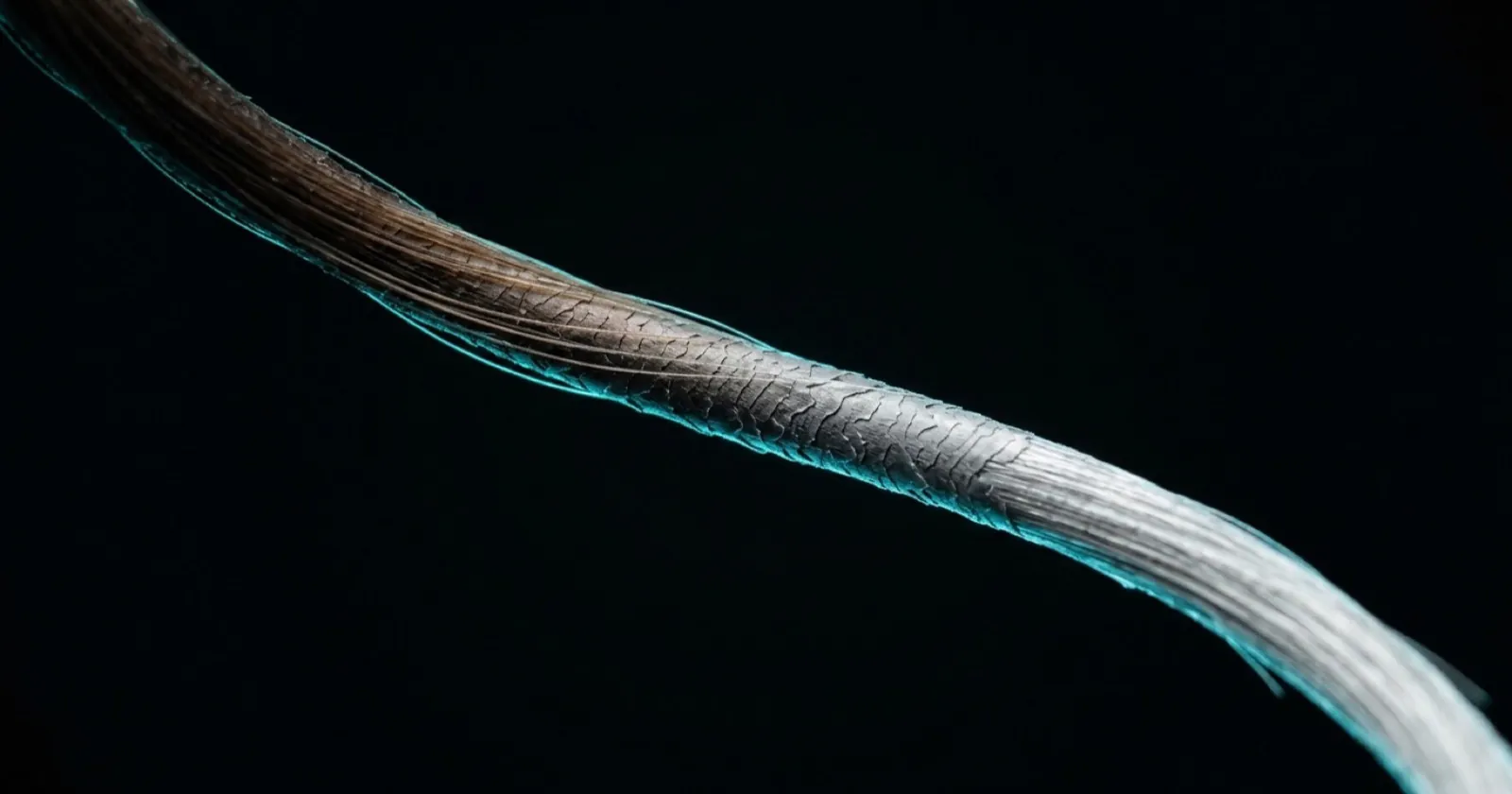
Hair turns gray when the pigment cells at the base of each hair slow down and then stop adding melanin to the growing strand. Age is the main reason this happens. Genes, smoking and some health conditions can move the timing earlier, and research in mice and a small study of human hairs also connects stress to graying.
Where hair color comes from
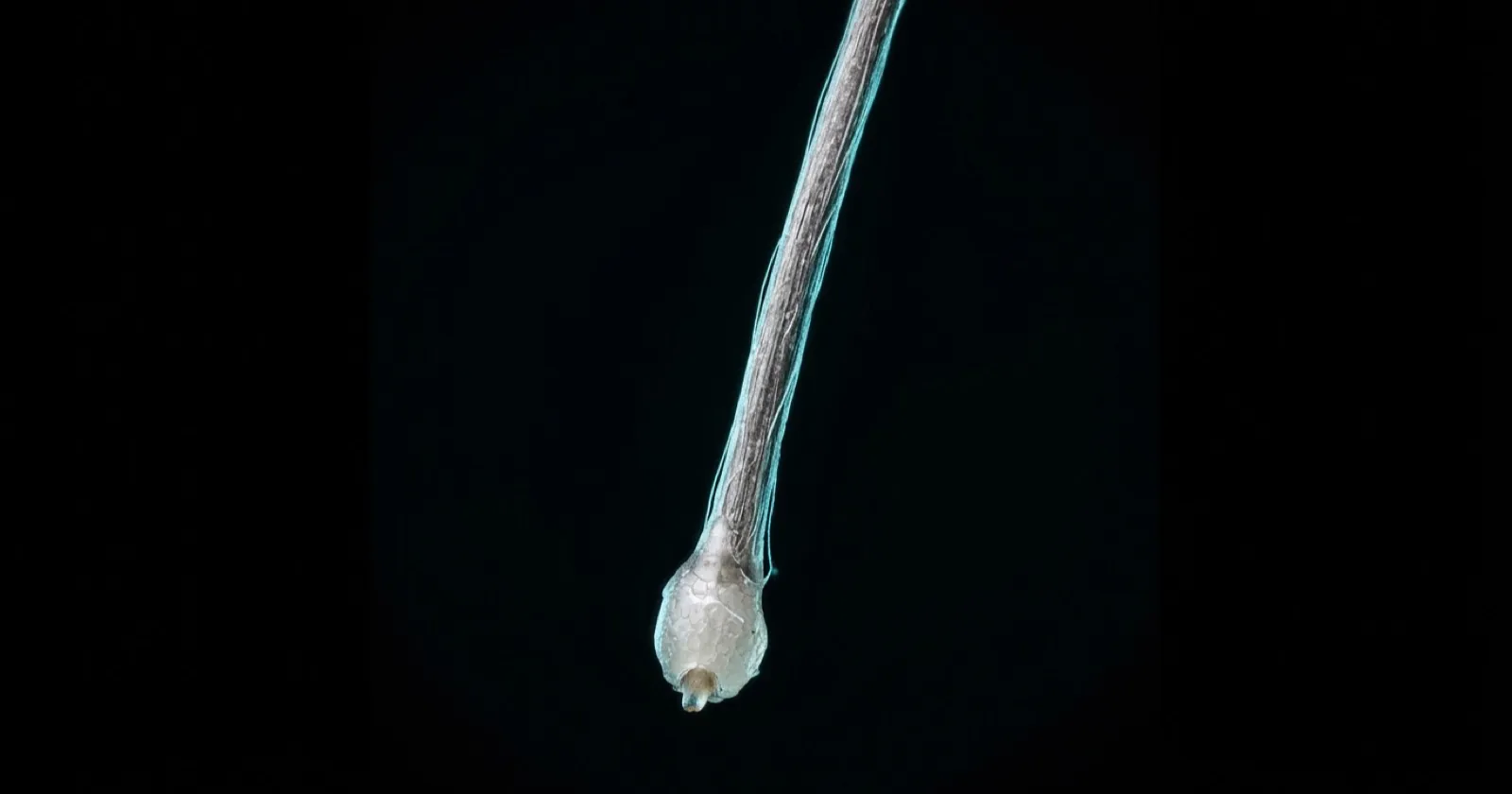
Every hair grows from a follicle, a small pocket in the skin. At the bottom of the follicle sits the hair bulb. According to a 2005 review in the Journal of Investigative Dermatology, the bulb is the only place where pigment for the hair shaft is made. Pigment cells called melanocytes produce melanin there and pass it into the cells that will form the strand. Most of that melanin ends up in the cortex, the thick middle layer of the hair.
Melanin comes in two main forms. Eumelanin gives black and brown shades, and pheomelanin gives red tones. The U.S. National Library of Medicine explains that black hair holds a large amount of eumelanin, blond hair holds very little, and red hair is mostly pheomelanin. Many genes set this mix, and it can shift during childhood. Blond children often have darker hair by the time they are teenagers.
Color is added only while a hair is growing. The 2005 review describes pigment production as tied to the growth phase of the hair cycle. It switches off when the hair stops growing and stays off during the resting phase. The part of the hair you can see has no living cells, so its color is fixed once it forms. That is why a color change always shows up first at the root. Our guide on how hair gets its color walks through each step.
What changes inside a graying follicle
In a follicle that is going gray, the bulb has far fewer melanocytes that are still making pigment. The same 2005 review describes a second problem. Some hair cells lack melanin even when pigment cells sit right next to them, which points to a failure in passing pigment along. Pigment cells in graying bulbs can also fill with small sacs called vacuoles. This is a common reaction to oxidative stress, a type of chemical damage inside cells.
The stem cell supply runs out
Each follicle keeps a small supply of melanocyte stem cells higher up, in an area called the bulge. These cells rest most of the time. When a new hair starts to grow, they supply fresh pigment cells for it. The 2005 review estimated that a scalp follicle goes through about 7 to 15 rounds of this renewal over an average of 45 years before gray appears.
A 2024 review in the Journal of Investigative Dermatology states that graying becomes permanent only when the stem cells in the bulge are depleted. A 2023 study in mice, published in Nature, found a related problem. With age, more of these stem cells become stranded in one spot and stop producing new pigment cells.
Hydrogen peroxide builds up
A 2009 study in The FASEB Journal found that gray and white scalp hairs hold hydrogen peroxide in millimolar concentrations. The enzymes that normally break it down, or repair the damage it causes, were almost absent in gray follicles. The peroxide damaged tyrosinase, the key enzyme for making melanin, and the authors linked this to a gradual loss of hair color.
Each follicle keeps its own schedule
These changes happen one follicle at a time. A physician writing for UAMS Health, the health system of the University of Arkansas for Medical Sciences, explains that the hairs around a gray hair do not turn white until their own pigment cells die. This is why graying is slow and uneven. A 2013 review in the Indian Journal of Dermatology, Venereology and Leprology notes that color can range from full to none from one hair to the next, and even along a single hair.
A hair also keeps a record of its own recent past. In the 2021 study described below, researchers worked from a growth rate of 1 centimeter per month. In their analysis, each centimeter of hair stood for one month of growth, so a change in color could be matched to the weeks when it happened.
When graying starts and how far it goes
Most people notice their first gray hairs in their 30s or 40s, according to the American Academy of Dermatology (AAD). Ancestry changes the timing. The same 2013 review reports that white people begin to gray in their mid-30s on average, Asian people in their late 30s and people of African descent in their mid-40s. In men, gray usually appears first at the temples and sideburns. In women, it usually starts around the edge of the hairline.
An old saying claims that half of all people have half gray hair by age 50. A 2012 survey of 4,192 people around the world tested that idea. Between the ages of 45 and 65, 74 percent had some gray hair, and on average it covered 27 percent of the head. Only 6 to 23 percent had at least half gray hair at age 50, depending on their origin and natural hair color. Men had more gray hair than women. Our page on when gray hair starts has the full age ranges.
Doctors usually call graying premature when it begins before 20 in white people, before 25 in Asian people and before 30 in people of African descent. It is not rare. In a questionnaire study of 6,390 men under 30, 25.3 percent reported premature graying. Our post on gray hair in your 20s looks at the usual reasons.
What sets the timing
The table below summarizes the main factors and the kind of evidence behind each one.
| Factor | What research found | Type of evidence |
|---|---|---|
| Age | Age explained 47.5 percent of the differences in graying among nearly 1,000 people in Poland | Population study |
| Genes | A common IRF4 variant was linked to more graying in 6,357 people | Genome-wide study |
| Stress | Pigment stem cells were lost within days in stressed mice; graying tracked stress in 14 people | Mouse study and small human study |
| Smoking | Smokers were two and a half times more likely to go gray before 30 | Survey of 207 adults in Jordan |
| Low vitamin B12, iron or thyroid hormone | Linked to premature graying | Reviews of clinical studies |
| Vitiligo and alopecia areata | Can leave hair white or gray | Clinical descriptions |
Genes
Family history is one of the clearest signals. Cleveland Clinic cites a study of people with premature graying in which nearly 40 percent had a family history of it. In the study of 6,390 young men, a family history of early graying was the factor most strongly tied to going gray early.
The first gene linked to graying was reported in 2016. A team studying 6,357 people in five Latin American countries found that a common variant of a gene called IRF4 was linked to more graying. IRF4 helps turn on the gene for tyrosinase, and this variant lowers melanin production. The team estimated the heritability of graying at 0.27. Heritability is the share of differences between people that is linked to genetic differences, and this was the lowest figure among all the hair traits they measured. A 2020 study of nearly 1,000 people in Poland found that genetic variants explained less than 10 percent of the differences in graying. Age explained far more. The page on genetics and gray hair explains what a DNA test can and cannot tell you.
Stress
A 2020 study in Nature tested stress in black-haired mice. Pain and other stressors made nerves release norepinephrine, a chemical messenger, next to the pigment stem cells. The resting stem cells suddenly began to multiply, turned into pigment cells and moved away. Within 5 days their numbers had fallen sharply. The hair that grew next was white, and the change was permanent. Mice without immune cells, and mice without adrenal glands, still turned gray.
In people, a 2021 study in eLife examined 397 hairs from 14 volunteers aged 9 to 65. Some hairs went gray during periods the volunteers rated as stressful, and a few gray hairs regained color when stress eased. In one case, five hairs on one person's head turned dark again during a vacation. The study was small. Its senior author thinks stress pushes a hair over a threshold into gray when that hair is already close to it, as it often is in middle age. The guide on stress and gray hair covers both studies and their limits.
Smoking
In a survey of 207 adults in Jordan, smokers were two and a half times more likely to go gray before age 30 than non-smokers. The authors described their study as hypothesis-generating. That means it shows a link, not proof that smoking causes gray hair. The survey of 6,390 young men also found a link with longer, heavier smoking.
Health conditions and nutrients
Cleveland Clinic states that lower levels of vitamin B12 and iron are linked to premature graying. A 2018 review reports that 55 percent of people with pernicious anemia, a condition that leads to low vitamin B12, went gray before 50, compared with 30 percent of people without it. The same review lists low thyroid hormone as a cause of early graying. Vitiligo and alopecia areata, two conditions in which the immune system attacks the body's own cells, can also leave hair white or gray.
Can gray hair get its color back?
For most people, no. Cleveland Clinic notes that once cells stop making melanin, they usually do not start again. The AAD says there are currently no effective medical treatments that add color back to hair.
There are exceptions, and they are rare. The 2021 eLife study recorded gray hairs that regained color in men and women, in several ethnic groups and at a range of ages. Some medicines have darkened gray hair as a side effect. A 2023 review describes 14 people whose hair regained pigment while they received a type of immunotherapy for lung cancer, and 9 of 133 people with leukemia whose hair regained pigment on the drug imatinib. These reports give researchers ideas to test. They are not treatments for gray hair. The post can gray hair turn back to color goes through the evidence.
Gray, white and the shades in between
A white hair is a hair that has lost its pigment. The 2013 review explains that its white color is an optical effect. Light reflecting off the hair hides the natural pale yellow color of keratin, the protein hair is made of. A head of hair looks gray because it contains a mix of pigmented hairs and white hairs, along with some single hairs that hold only part of their pigment. The difference is explained in white hair vs gray hair. Yellowing is a separate topic, covered in our post on why gray hair turns yellow.
Two common beliefs the research does not support
Two beliefs are especially common. The first is that plucking one gray hair makes several grow back. The same UAMS physician explains that each follicle can grow only one hair, so a plucked gray hair is replaced by one new gray hair. The AAD adds that plucking can cause hair thinning. The full answer is in does plucking gray hair make more grow.
The second belief is that a shock can turn hair white overnight. The part of a hair above the skin has no living cells, so it is not thought to be able to change color on its own. A 2013 review of 196 reported cases notes that the leading explanation is a form of alopecia areata in which the pigmented hairs fall out quickly and the white hairs stay. Some reported cases remain unexplained. Our page on gray hair myths checks these and other claims against the research.
When to see a doctor
Almost everyone's hair turns gray with age, according to the National Library of Medicine, and the timing varies from person to person. A few patterns are worth showing to a doctor or dermatologist:
- Gray or white hair that appears suddenly.
- A single patch of white hair. Doctors call this poliosis, and DermNet lists causes that include vitiligo, alopecia areata and some genetic conditions.
- Graying that starts very early, or that comes with other new symptoms.
The AAD notes that a dermatologist can help when an underlying condition, such as a vitamin deficiency, may be affecting hair color. This guide is for general education. It is not medical advice.
If you want to change how gray looks
A 2018 review describes hair dye as the main option for people who want to cover gray, and a 2023 review states that there is no effective method other than dyes. Our guide to ways to cover gray hair compares permanent, semi-permanent and gradual options. For people who keep their gray, caring for gray hair covers texture, yellowing and styling.
LIUMIQ is working on a gradual color product for gray hair. It is still in development and is not for sale. You can join the waitlist to hear how the work goes.
Read the chapters
Start here
- How Hair Gets Its Color From Melanin and Pigment CellsHair color comes from melanin made in the hair bulb. Learn the two types of melanin, why color is added only while a hair grows, and what this means for gray.
- When Gray Hair Starts and What Counts as PrematureMost people get their first gray hairs in their 30s or 40s. See how the timing differs by ancestry and sex, and what doctors count as premature graying.
What drives it
- What Genetics Can and Cannot Tell You About Gray HairGraying runs in families, but known genes explain only a small part of it. Learn what the IRF4 study found and why age predicts graying better than DNA.
- Does Stress Cause Gray Hair? What the Research ShowsA 2020 mouse study and a 2021 study of human hairs link stress to graying. See what each study found, how the effect works, and what is still unknown.
Questions
Each hair gets its color from melanin made by pigment cells in the hair bulb. With age, the bulb has fewer active pigment cells, and the stem cells that replace them are used up, so new hair grows in with little or no melanin. Research has also found hydrogen peroxide building up in gray hair, where it damages the main enzyme that makes melanin.
Most people notice their first gray hairs in their 30s or 40s. Reviews report an average start in the mid-30s for white people, the late 30s for Asian people and the mid-40s for people of African descent. Graying before 20 in white people, before 25 in Asian people or before 30 in people of African descent is usually called premature.
Research supports a link. In a 2020 study, stress in mice made nerves release norepinephrine, which used up the stem cells that supply pigment cells, and the new hair grew in white. A 2021 study of hairs from 14 people found graying that lined up with stressful periods, but the human evidence is still small.
Usually not. Researchers have recorded a few gray hairs regaining color, mostly in people who were just starting to gray, and some medicines have darkened hair as a side effect. The American Academy of Dermatology says there are currently no effective medical treatments that add color back to hair.
Graying with age happens to almost everyone, and the timing varies from person to person. Early graying has been linked with low vitamin B12 or iron, thyroid problems, vitiligo and smoking. Graying that starts very early, appears suddenly or comes in patches is worth checking with a doctor.
Sources
- 1.Hair follicle pigmentation, Journal of Investigative Dermatology
- 2.Is hair color determined by genetics?, MedlinePlus Genetics, U.S. National Library of Medicine
- 3.Canities subita: a reappraisal of evidence based on 196 case reports published in the medical literature, International Journal of Trichology
- 4.Human Hair Graying Revisited: Principles, Misconceptions, and Key Research Frontiers, Journal of Investigative Dermatology, March 2024 (Paus, Sevilla and Grichnik)
- 5.Dedifferentiation maintains melanocyte stem cells in a dynamic niche, Nature
- 6.Senile hair graying: H2O2-mediated oxidative stress affects human hair color by blunting methionine sulfoxide repair, The FASEB Journal
- 7.What causes gray hair, and can I stop it?, American Academy of Dermatology
- 8.Premature graying of hair, Indian Journal of Dermatology, Venereology and Leprology
- 9.Greying of the human hair: a worldwide survey, revisiting the '50' rule of thumb, British Journal of Dermatology
- 10.Association of premature hair graying with family history, smoking, and obesity: a cross-sectional study, Journal of the American Academy of Dermatology
- 11.What Causes Gray Hair?, Cleveland Clinic
- 12.A genome-wide association scan in admixed Latin Americans identifies loci influencing facial and scalp hair features, Nature Communications
- 13.Exploring the possibility of predicting human head hair greying from DNA using whole-exome and targeted NGS data, BMC Genomics
- 14.Hyperactivation of sympathetic nerves drives depletion of melanocyte stem cells, Nature
- 15.Quantitative mapping of human hair greying and reversal in relation to life stress, eLife
- 16.It's True: Stress Does Turn Hair Gray (And It's Reversible), Columbia University Irving Medical Center
- 17.Smokers' hair: Does smoking cause premature hair graying?, Indian Dermatology Online Journal
- 18.Premature Graying of Hair: Review with Updates, International Journal of Trichology
- 19.Reversing Gray Hair: Inspiring the Development of New Therapies Through Research on Hair Pigmentation and Repigmentation Progress, International Journal of Biological Sciences
- 20.Does Pulling One Gray Hair Cause More to Grow in its Place?, UAMS Health
- 21.Poliosis, DermNet