Chapter 03 of 6
Gray Blending and Lowlights
How gray blending, lowlights and highlights soften gray instead of hiding it, what they do to the line at the roots, and what to ask before a salon visit.
Updated September 28, 2026
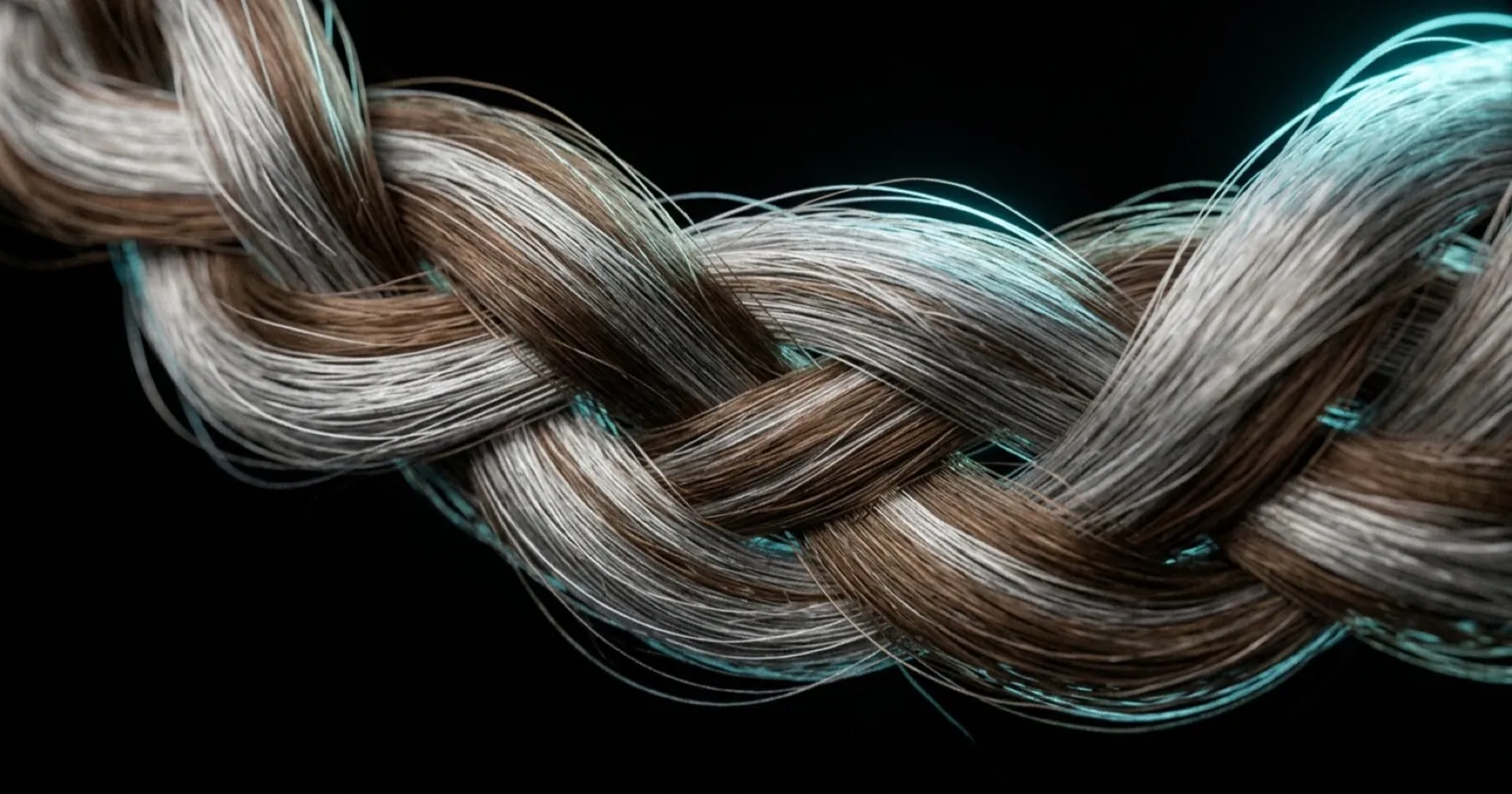
Gray blending uses color to make gray hair less noticeable instead of hiding every gray strand. A colorist adds darker strands (lowlights), lighter strands (highlights), or a sheer demi-permanent or semi-permanent color, so the gray mixes with other shades. You still see some gray, but the line where new growth meets colored hair is softer than it is with solid permanent color.
This page is part of our guide to ways to cover gray hair.
Blending versus covering
Full coverage aims to hide every gray strand. It usually means permanent dye, which a 2014 review in Actas Dermo-Sifiliográficas says can cover up to 100 percent of gray. The problem is regrowth. A 2015 review in the International Journal of Trichology notes that white hair shows again 10 to 15 days after dyeing, because new hair has grown in.
Blending takes a different approach. Gray stays part of the finished look. The colorist keeps it and adds shades that sit closer to the gray or that break it up, so there is no solid block of color with a band of white at the roots.
There are three main tools: lowlights, highlights and sheer color. They can be used alone or together.
Lowlights
Lowlights are strands dyed darker than the gray. They add depth and break up large areas of gray or white. Because gray hair has little or no pigment left, making selected strands darker does not need bleach.
This fits the advice of the American Academy of Dermatology (AAD). It suggests choosing a dye within three shades of your natural color, and it says that dyeing hair darker is usually better than going lighter.
Lowlights still put hair dye on the chosen strands, so the allergy steps for that dye apply. The FDA advises a skin patch test every time before you dye your hair.
Highlights
Highlights are strands made lighter than the rest of the hair. The idea is that lighter strands sit closer to the gray in tone, so the gray stands out less.
Lightening needs bleach. According to the 2014 review, hair bleaches contain hydrogen peroxide, ammonia and persulfates, and the lightening they give is permanent. Bleach breaks disulfide bonds, which are chemical links that help hold the hair protein together. The review lists three results: the cuticle becomes more porous, the hair shaft swells with water, and the hair becomes more brittle.
The AAD adds that lightening hair by more than three shades needs higher volumes of peroxide, which causes more damage. The 2014 review also explains that dark hair passes through several color stages as it lightens, from brown to red, orange and yellow. For that reason, partial bleaching of very dark hair can leave unwanted yellow or orange tones.
Sheer color over all the hair
Another option is a sheer layer of demi-permanent or semi-permanent color over the whole head. The 2014 review says semi-permanent dyes are used to "modify or soften the effect of gray hairs," and that demi-permanent dyes can cover up to 50 percent of gray. The 2015 review says demi-permanent color fades after 10 to 15 shampoos, or sooner. Semi-permanent color lasts four to eight shampoos, depending on the source.
Because these colors cover only part of the gray and fade over time, the line at the roots is less sharp. Our page on permanent, demi-permanent and semi-permanent dye explains how each type works.
Why the roots look softer
Hair grows all the time. In a 2004 study of scalp hair from women, white hairs grew 0.38 mm a day and pigmented hairs 0.35 mm a day. At those rates, four weeks adds 9.8 to 10.6 mm of new growth.
With solid dark color, that new growth is a band of white or gray against a dark background, and it is easy to see. With blending, the new gray meets hair that already includes gray, lighter strands or a sheer tint. The contrast is lower, so the same amount of growth is less obvious. That is the main practical difference between blending and full coverage, and it can change how often you touch up gray roots.
How gray hair takes color
Gray strands can differ from pigmented ones in more than color. In the 2004 study, white hairs were thicker on average than pigmented hairs (67.68 micrometers against 57.41) and had a larger medulla, the soft core at the center of the strand. A 2009 review in the International Journal of Trichology reports that gray hair is often said to resist artificial color, though it calls that evidence anecdotal. It also reports measured differences: gray hair is more sensitive to weathering and reacts more strongly to oxidizing and reducing chemicals.
For blending, this means a colorist may want to see how your gray strands take a color before doing your whole head. The NHS suggests testing a dye on a strand of hair at least 48 hours before you use it.
Blending options side by side
| Approach | What it does | What it uses | Line at the roots | How long the color lasts |
|---|---|---|---|---|
| Solid permanent color (for comparison) | Covers up to 100 percent of gray | Up to 6 percent peroxide, ammonia and dye precursors | Sharp | Until the hair grows out |
| Lowlights | Adds darker strands | Hair dye on selected strands | Softer | Depends on the dye |
| Highlights | Adds lighter strands | Bleach: peroxide, ammonia and persulfates | Softer | The lightening is permanent |
| Demi-permanent tint | Covers up to 50 percent of gray | 2 percent peroxide | Softer, and fades | 10 to 15 shampoos |
| Semi-permanent tint | Softens gray | Ready-made dye, usually no peroxide | Softer, and fades | 4 to 8 shampoos |
Questions to ask before you book
A consultation is the time to plan. Useful questions include:
- Which products will you use, and do any contain PPD? The NHS says PPD is found in many permanent and some semi-permanent dyes.
- When and where should I do a skin test? The FDA advises a patch test on your skin every time before dyeing.
- I have reacted to hair dye or had a "black henna" tattoo before. What does that change? The NHS advises avoiding PPD products if either applies to you.
- I bleached, relaxed or permed my hair recently. Is that a problem? The FDA says to wait at least 14 days after those treatments before you use dye.
- How often will this need redoing, and what will it cost over a year? Our page on how much covering gray costs lists the factors to ask about.
Blending as a step toward going natural
Blending can also be a step on the way to letting gray grow in. Mixing lighter or darker strands into the gray can soften the line between the old color and new growth while the colored ends grow out and are cut away. Our guide to growing out gray hair covers the stages. Between salon visits, root touch-up products can cover regrowth until your next wash.
LIUMIQ is developing a gradual color product for gray hair. Nothing is for sale yet. If you would like to hear how the work goes, join the waitlist.
Questions
Coverage aims to hide every gray strand, usually with permanent dye, which a 2014 review says can cover up to 100 percent of gray. Blending leaves some gray visible and mixes it with other shades, using lowlights, highlights, or a sheer demi-permanent or semi-permanent color. You see more gray, but the line at the roots is softer as the hair grows.
It depends on your natural color and how much gray you have. Lowlights add darker strands and do not need bleach. Highlights make strands lighter, which needs bleach, and the American Academy of Dermatology notes that lightening by more than three shades needs stronger peroxide and causes more damage. A colorist can look at your hair and suggest a mix.
It can make the change less sharp. Darker or lighter strands mixed into the gray soften the line between the old color and new growth while the colored ends grow out and are cut away. In a 2004 study, scalp hair grew 0.35 to 0.38 mm a day, so the full change takes months.
Related reading
- Permanent, Demi-Permanent and Semi-Permanent Hair DyeWays to Cover Gray Hair
- Root Touch-Up Products for Gray HairWays to Cover Gray Hair
- How Much Covering Gray Hair CostsWays to Cover Gray Hair
- How Often to Touch Up Gray Roots and What Sets the TimingBlog
- How to Grow Out Gray Hair, Stage by StageCaring for Gray Hair
Sources
- 1.Coloring and perming tips for healthier-looking hair, American Academy of Dermatology
- 2.Hair Cosmetics: Dyes, Actas Dermo-Sifiliográficas (Guerra-Tapia and Gonzalez-Guerra, 2014)
- 3.Hair Cosmetics: An Overview, International Journal of Trichology (Gavazzoni Dias, 2015)
- 4.Hair dye poisoning and the developing world, Journal of Emergencies, Trauma and Shock (Sampathkumar and Yesudas, 2009)
- 5.Thickness, medullation and growth rate of female scalp hair are subject to significant variation according to pigmentation and scalp location during ageing, European Journal of Dermatology (Van Neste, 2004)
- 6.Oxidative Stress in Ageing of Hair, International Journal of Trichology (Trüeb, 2009)
- 7.Hair Dyes, U.S. Food and Drug Administration
- 8.Hair dye reactions, NHS