Chapter 06 of 6
How Much Covering Gray Hair Costs
The factors that set the cost and time of covering gray hair at a salon or at home, from how often roots need color to technique, shade and hair length.
Updated September 28, 2026
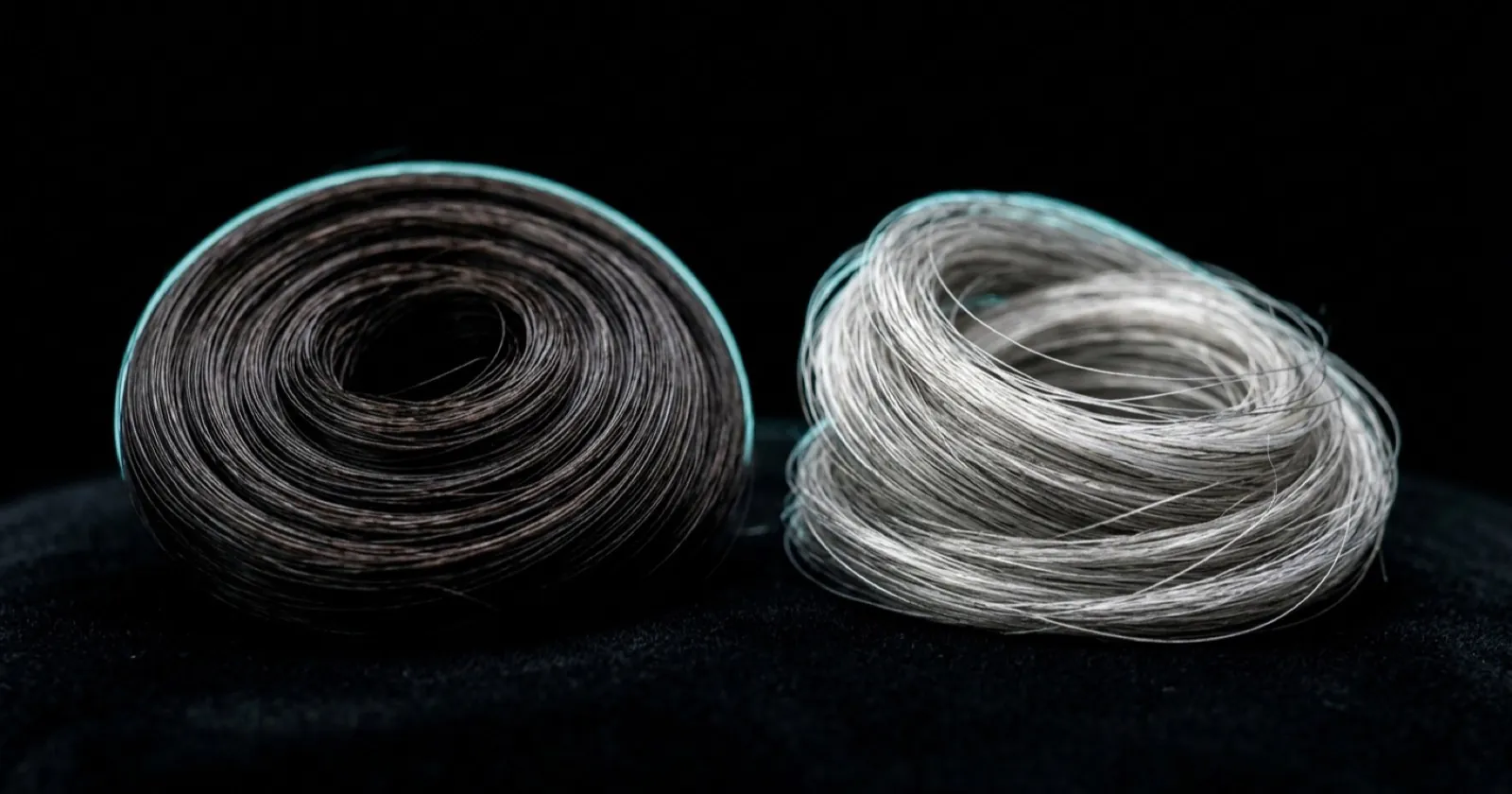
The cost of covering gray depends more on how often you repeat it than on the price of one session. Permanent color needs the roots redone every few weeks as hair grows, demi-permanent and semi-permanent color fade after a set number of shampoos, and temporary products last only until the next wash. We do not list prices on this page, because they differ by city, salon and product, and we did not find an independent, current source for them.
This page is part of our guide to ways to cover gray hair.
Frequency is the biggest factor
Every method has its own schedule, and the schedule sets the yearly total.
For permanent dye, two reviews give different intervals. A 2014 review in Actas Dermo-Sifiliográficas says dyeing must be repeated every 4 to 6 weeks to cover new growth. A 2015 review in the International Journal of Trichology suggests touching up the roots after 15 to 30 days. Here is what those intervals mean over a year:
| Interval between root sessions | Sessions per year |
|---|---|
| Every 15 days | 24 |
| Every 30 days | 12 |
| Every 4 weeks | 13 |
| Every 6 weeks | 8 or 9 |
These are simple divisions of a year, rounded to whole sessions.
Other methods follow different schedules:
- Demi-permanent color fades after 10 to 15 shampoos, according to the 2015 review. At three washes a week, that is 3.3 to 5 weeks.
- Semi-permanent color lasts four to eight shampoos, depending on the source. At three washes a week, that is 1.3 to 2.7 weeks.
- Gradual color is used often. The directions the FDA cited for one older progressive dye called for daily use until the shade was reached, usually 2 to 3 weeks, and then use once or twice a week.
- Temporary root products last until you wash your hair, so you reapply them after each wash.
How fast your hair grows
The interval that works for you depends on your hair. In a 2004 study of scalp hair from women, white hairs grew 0.38 mm a day and pigmented hairs 0.35 mm a day. At those rates:
- after two weeks, new growth is 4.9 to 5.3 mm
- after four weeks, it is 9.8 to 10.6 mm
- after six weeks, it is 14.7 to 16.0 mm
How soon that band bothers you depends on contrast. Dark color over white regrowth shows early. A shade closer to your gray, or blending, shows less. Our post on how often to touch up gray roots looks at this in more detail.
What you pay for at a salon
A salon price covers more than the dye. The main parts are:
- The colorist's time and skill. Application, timing, rinsing and styling all take time. Techniques that color selected strands, such as lowlights and highlights, can take longer than one all-over color.
- The product. Longer or thicker hair may need more of it.
- The skin test. The FDA advises a patch test on your skin every time before dyeing, following the product directions for timing. If the test is done at the salon, that can mean an extra short visit.
- Processing time. The 2014 review gives 20 to 40 minutes on the hair for permanent dye and 20 to 30 minutes for demi-permanent and semi-permanent dye. Application and rinsing come on top of that.
Waiting rules matter too. The FDA says to wait at least 14 days after bleaching, relaxing or perming before you use dye, so some combinations of services need separate visits.
What you pay for at home
Home color moves the work to you:
- The product, plus gloves. The FDA and the NHS both advise wearing gloves when you apply hair dye.
- Your time. This includes the skin test ahead of time, the application, the processing time and the cleanup.
- The risk of mistakes. Uneven results, missed spots or the wrong shade take time and money to fix. The 2014 review also warns that temporary dyes easily stain the hair and scalp.
A root-only job is smaller than an all-over color. The 2015 review advises applying root color only to the new growth, which also means using less product each time.
Choices that raise or lower the total
- How far your shade is from your natural color. The American Academy of Dermatology suggests staying within three shades of your natural color. It says lightening by more than three shades needs stronger peroxide, which damages hair more. The 2014 review notes that damage from dyes can be reduced with other hair products that improve styling and protect the cuticle, which adds another cost.
- Coverage or blending. Full coverage with permanent dye shows a sharp line as hair grows. Blending with lowlights, highlights or sheer color softens that line. See gray blending and lowlights.
- Touch-ups between sessions. Temporary products can hide roots until your next wash. They add their own cost, but they may let you wait longer between full sessions. See root touch-up products.
- The type of dye. Permanent dye lasts until the hair grows out. Demi-permanent and semi-permanent dye fade, so you recolor more often but see a softer change between sessions. See permanent, demi-permanent and semi-permanent dye.
Side by side
| Method | What you pay for | How often | Time on the hair each session |
|---|---|---|---|
| Salon permanent color | Colorist's time and skill, product | Roots every 15 days to 6 weeks (two reviews) | 20 to 40 minutes, plus application and rinsing |
| Home permanent color | Product, gloves, your time | Roots every 15 days to 6 weeks (two reviews) | 20 to 40 minutes, plus application and rinsing |
| Demi-permanent color | Product, plus salon time if done there | Fades after 10 to 15 shampoos | 20 to 30 minutes |
| Semi-permanent color | Product, plus salon time if done there | Fades after 4 to 8 shampoos | 20 to 30 minutes |
| Gradual color | Product | Frequent use, as the directions say | As the directions say |
| Temporary root products | Product | After each wash | As the directions say |
| Blending (salon) | Colorist's time and skill, product | Depends on the technique and dye | Depends on the technique |
Costs that should not be cut
Some shortcuts save money now and add risk. Do not skip the skin patch test. The FDA says to do one every time before you dye, because people can develop sensitivities with repeated exposure. Do not leave the product on longer than the directions say, and do not dye your hair if your scalp is irritated, sunburned or damaged. The NHS says reactions can take up to 72 hours to appear, so set your color date after the test window has passed.
If you are coloring at home for the first time, our post on covering gray at home for the first time explains each step.
LIUMIQ is working on a gradual color product for gray hair. It is still in development and is not for sale. You can join the waitlist to follow the work.
Questions
At home, you pay for the product and do the work yourself. At a salon, you also pay for the colorist's time and skill. We have not found an independent, current source for prices, so we do not list them. In both cases, the yearly total depends mostly on how often you repeat the color.
For permanent dye, a 2014 review says every 4 to 6 weeks, and a 2015 review says after 15 to 30 days. Your own interval depends on how fast your hair grows and how strongly your color contrasts with your gray.
Choose a shade close to your natural color, consider blending so regrowth is less obvious, use temporary root products between sessions, and apply permanent color only to new growth, as a 2015 review advises. Do not skip the skin patch test to save time.
Related reading
Sources
- 1.Hair Cosmetics: Dyes, Actas Dermo-Sifiliográficas (Guerra-Tapia and Gonzalez-Guerra, 2014)
- 2.Hair Cosmetics: An Overview, International Journal of Trichology (Gavazzoni Dias, 2015)
- 3.Hair dye poisoning and the developing world, Journal of Emergencies, Trauma and Shock (Sampathkumar and Yesudas, 2009)
- 4.Thickness, medullation and growth rate of female scalp hair are subject to significant variation according to pigmentation and scalp location during ageing, European Journal of Dermatology (Van Neste, 2004)
- 5.Termination of Listing of Color Additives Exempt From Certification; Lead Acetate (86 FR 56183), Federal Register, U.S. Food and Drug Administration
- 6.Hair Dyes, U.S. Food and Drug Administration
- 7.Hair dye reactions, NHS
- 8.Coloring and perming tips for healthier-looking hair, American Academy of Dermatology