Chapter 01 of 6
Permanent, Demi-Permanent and Semi-Permanent Hair Dye
How permanent, demi-permanent and semi-permanent hair dyes work, how long each one lasts, and how much gray each can cover, based on dermatology reviews.
Updated September 28, 2026
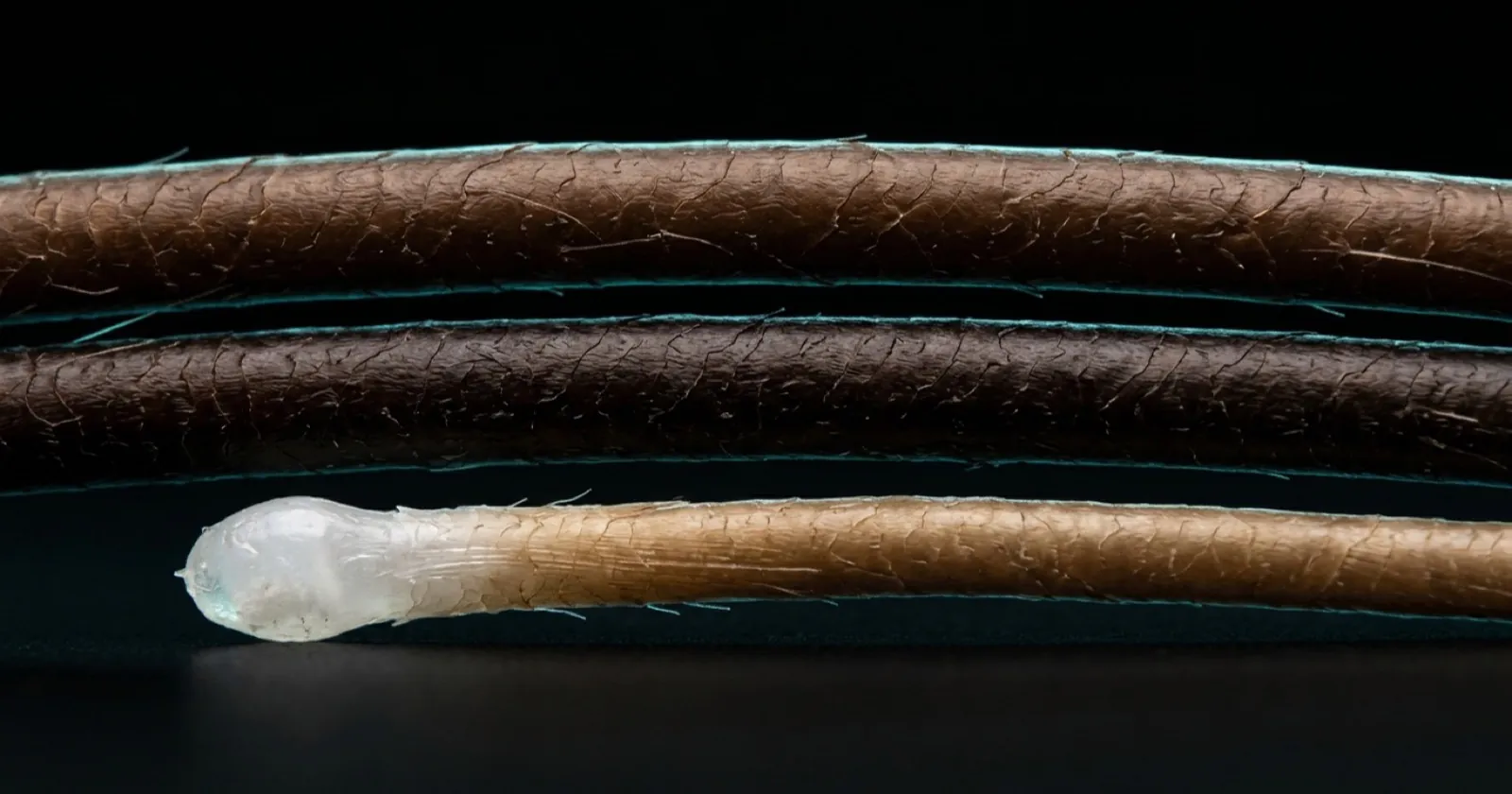
Permanent dye creates new color inside the hair, covers the most gray, and lasts until the hair grows out. Demi-permanent dye works the same basic way with a weaker developer, so it covers up to half of your gray and fades after 10 to 15 shampoos. The classic semi-permanent dye uses ready-made color with no developer. It softens gray instead of hiding it and lasts from four to eight shampoos, depending on the source.
This page is part of our guide to ways to cover gray hair.
A few words from the box
Four terms help when reading a box:
- Developer: the hydrogen peroxide lotion you mix with the color just before you use it.
- Oxidative dye: a dye whose color forms through a reaction with the developer.
- Cuticle: the thin outer layer of the hair strand.
- Cortex: the thick inner part of the strand, where the natural pigment sits.
A 2014 review in Actas Dermo-Sifiliográficas sorts synthetic hair dyes by how long the color lasts: temporary, semi-permanent and permanent, plus bleaches. The review treats demi-permanent dye as a stronger, oxidative form of semi-permanent dye.
How permanent dye works
Permanent dye comes as two parts that you mix. The tint holds dye precursors (small molecules that will become color) and an alkaline agent. The developer holds hydrogen peroxide. The 2014 review says permanent dyes contain up to 6 percent peroxide and use ammonia, which brings the mixture to a pH of 9 to 10.5. That high pH helps the mixture pass all the way into the cortex.
According to the review, three things then happen inside the hair:
- The peroxide breaks down some of the natural melanin, which lightens the hair's own color.
- The precursors, such as p-diamines and p-aminophenols, react with couplers such as resorcinol or m-aminophenol to form color.
- The new color molecules join into larger ones that are too large to pass back out through the cuticle.
That last step is why the color stays until the hair grows out. The review gives 20 to 40 minutes as a typical time on the hair, but always follow the time on your product.
A 2015 review in the International Journal of Trichology says the white hair that shows 10 to 15 days after dyeing is new growth, not faded dye. It advises touching up the roots after 15 to 30 days and applying the product only to the new growth. The 2014 review puts the interval at 4 to 6 weeks. Our post on how often to touch up gray roots explains why the right timing differs from person to person.
Permanent dye can also harm the hair itself. A 2018 review in the International Journal of Trichology notes a risk of damage to the hair shaft from oxidation. The 2015 review adds that permanent dyes may damage the cuticle by removing a natural fatty layer that helps hair repel water.
How demi-permanent dye works
Demi-permanent dye uses a milder version of the same reaction. The 2014 review says it contains 2 percent hydrogen peroxide and low levels of alkaline agents, generally monoethanolamine rather than ammonia. The 2015 review describes demi-permanent dyes as having no ammonia or ethanolamine, which makes them gentler on hair than permanent colors. Both reviews agree that it does not reach as deeply into the hair as permanent dye.
As a result, demi-permanent dye is used to brighten natural color or to cover up to 50 percent of gray hair, according to the 2014 review, but it can lighten hair very little. The 2015 review says it fades after 10 to 15 shampoos, or even earlier. The 2014 review gives 20 to 30 minutes on the hair before rinsing.
Demi-permanent dye is still an oxidative dye. The 2015 review notes that it contains hydrogen peroxide, resorcinol and para-dyes, the same family of chemicals as permanent dye, so take the same care.
How semi-permanent dye works
The 2014 review notes that semi-permanent dyes can be oxidative or non-oxidative. The non-oxidative kind is the classic semi-permanent dye. It uses small, ready-made dye molecules, most often nitro dyes, that slip past the cuticle "with no oxidative reaction whatsoever." Washing opens the cuticle again and lets the water-soluble dye out, so the color fades a little each time.
Sources disagree on how long it lasts. The 2014 review says six to eight shampoos. A 2025 review in Clinical, Cosmetic and Investigational Dermatology says up to six washes, and a 2009 review in the Journal of Emergencies, Trauma and Shock says four to five shampoos. Semi-permanent dye cannot lighten hair, because it contains no bleaching agent. The 2014 review describes its role on gray as softening the effect of gray hairs, not covering them.
If a product sold as semi-permanent comes with a developer to mix in, it is an oxidative product, closer to demi-permanent dye.
Side by side
| Feature | Permanent | Demi-permanent | Semi-permanent (non-oxidative) |
|---|---|---|---|
| Mixed with a developer | Yes, up to 6 percent peroxide | Yes, 2 percent peroxide | No |
| How deep the color goes | All the way into the cortex | Less deep than permanent | Shallow: the cuticle and the outer edge of the cortex |
| Can it lighten hair? | Yes | Very little | No |
| Gray coverage | Up to 100 percent | Up to 50 percent | Softens gray |
| How long it lasts | Until the hair grows out | 10 to 15 shampoos | 4 to 8 shampoos |
| Typical time on the hair | 20 to 40 minutes | 20 to 30 minutes | 20 to 30 minutes |
Most rows come from the 2014 review. Demi-permanent fading is from the 2015 review, and the semi-permanent range combines three reviews.
What each type does to gray hair
Gray hair has little or no melanin, so there is no natural color underneath for the dye to build on. Permanent dye handles this best. The 2014 review says it gives the highest gray coverage "even with recalcitrant hair," meaning hair that resists color. Demi-permanent dye covers part of the gray, and semi-permanent dye mainly softens it.
The 2015 review says demi-permanent dyes are less effective on gray or white hair because they only reach the cuticle. The 2014 review places them a little deeper, but both agree they cover less gray than permanent dye.
Gray hair is also often said to be harder to color. A 2009 review in the International Journal of Trichology reports this, but it calls the evidence anecdotal. Our post on why gray hair resists dye looks at what is actually known.
If you want gray softened rather than covered, demi-permanent or semi-permanent color can be part of gray blending and lowlights. If you want a slow change in small steps, see gradual hair color explained.
Choosing a shade
The American Academy of Dermatology suggests choosing a dye within three shades of your natural color. It says that dyeing hair darker is usually better than going lighter, because lightening by more than three shades needs higher volumes of peroxide, which cause more hair damage.
Safety steps for all three types
- Test every time. The FDA says to do a patch test on your skin every time before you dye your hair.
- Know the main allergen. The NHS says PPD is found in many permanent and some semi-permanent dyes. DermNet reports that about 10 percent of people who are allergic to PPD also react to semi-permanent dyes. In the UK, the law limits PPD to 2 percent in the mixed product that goes on the hair.
- Protect your eyes. Keep dyes away from your eyes, and never use them on eyebrows or eyelashes. The FDA says hair dyes have caused eye injuries, including blindness, when used in the eye area.
- Give your hair a break. The FDA says to wait at least 14 days after bleaching, relaxing or perming before you use dye.
Symptoms and testing are covered on our page about hair dye allergies and patch tests.
LIUMIQ is working on a gradual color product for gray hair. It is not for sale yet. To follow its development, join the waitlist.
Questions
Demi-permanent color is mixed with a weak developer (2 percent hydrogen peroxide), so its color forms through a chemical reaction. It lasts 10 to 15 shampoos and covers up to 50 percent of gray. The classic semi-permanent color uses ready-made dye with no developer. It softens gray, lasts four to eight shampoos depending on the source, and cannot lighten hair.
Permanent dye. A 2014 review in Actas Dermo-Sifiliográficas says it has the highest gray coverage, up to 100 percent, even on hair that is hard to color. The downside is that the roots need new color as the hair grows: every 4 to 6 weeks in that review, and after 15 to 30 days in a 2015 review.
A 2015 review in the International Journal of Trichology says demi-permanent color fades after 10 to 15 shampoos, or even earlier. Because it covers only part of the gray to begin with, the gray becomes more visible as the color fades.
Yes. Follow the label and test first. The NHS says PPD, the main cause of hair dye allergy, is in many permanent and some semi-permanent dyes, and DermNet reports that about 10 percent of people who are allergic to PPD also react to semi-permanent dyes.
Related reading
Sources
- 1.Hair Cosmetics: Dyes, Actas Dermo-Sifiliográficas (Guerra-Tapia and Gonzalez-Guerra, 2014)
- 2.Hair Cosmetics: An Overview, International Journal of Trichology (Gavazzoni Dias, 2015)
- 3.Gray Hair: From Preventive to Treatment, Clinical, Cosmetic and Investigational Dermatology (Herdiana, 2025)
- 4.Hair dye poisoning and the developing world, Journal of Emergencies, Trauma and Shock (Sampathkumar and Yesudas, 2009)
- 5.Premature Graying of Hair: Review with Updates, International Journal of Trichology (Kumar, Shamim and Nagaraju, 2018)
- 6.Oxidative Stress in Ageing of Hair, International Journal of Trichology (Trüeb, 2009)
- 7.Hair Dyes, U.S. Food and Drug Administration
- 8.Hair dye reactions, NHS
- 9.Paraphenylenediamine and hair dye contact allergy, DermNet
- 10.Coloring and perming tips for healthier-looking hair, American Academy of Dermatology
- 11.Regulation (EC) No 1223/2009 on cosmetic products, Annex III (as it applies in the UK), legislation.gov.uk